
Intellectual Freedom at WBRL
On This Page
FTR Blog

Freedom to Read
Read Freely
Read Freely
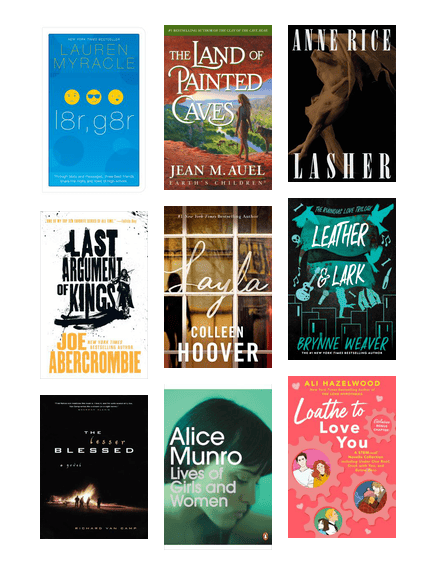
The Alberta Public School Book Ban Attempt of 2025-Part 2
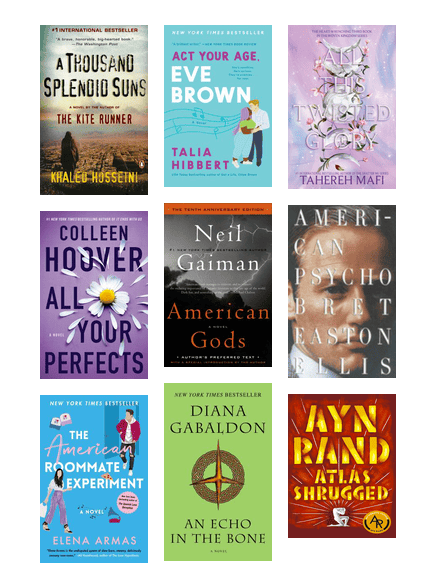
The Alberta Public School Book Ban Attempt of 2025-Part 1
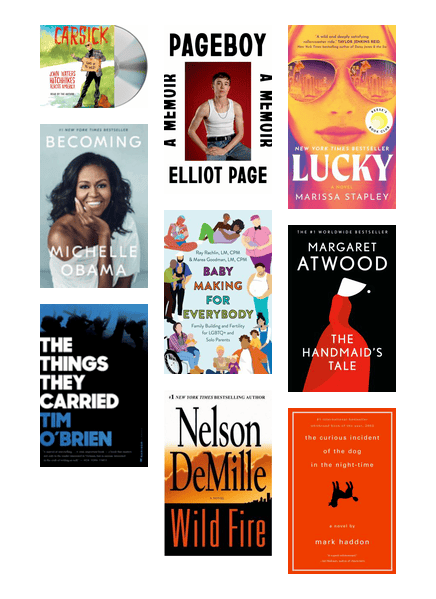
Freedom to Read for Adults
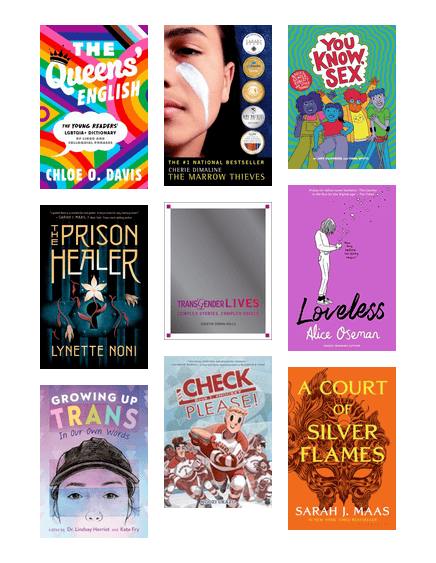
Freedom to Read for Teens
The Alberta Public School Book Ban Attempt of 2025-Part 2
The Alberta Public School Book Ban Attempt of 2025-Part 1
Freedom to Read for Adults
Freedom to Read for Teens
Information for Parents
Wood Buffalo Regional Library (WBRL) offers services, programs, and materials to meet a wide variety of community needs, support intellectual freedom, and contribute to a diverse and inclusive region.
WBRL respects every individual’s right to decide what content they engage with through our library – whether borrowing materials, accessing library services, or participating in programs or events. In the case of a child, these decisions rest with the parent or guardian. Attending any program or borrowing any materials is a personal choice, and not all programs and materials will interest all community members or align with all viewpoints.
We encourage families to talk together about what is appropriate to read, watch, listen to, and play for their family. Libraries respect family autonomy while providing equal access to all.
Intellectual freedom is essential for children and youth to effectively explore the world of ideas; discover and pursue interests; learn skills and access information; inspire innovation; and grow in self-knowledge and empathy. Libraries respect the rights of children to access information and ideas.
Parents and guardians have the right to steward their child’s exploration of the library in a manner consistent with the evolving capacities of the child, but do not have the right to place access restrictions on other children.
– CFLA-FCAB Statement on Libraries & the Intellectual Freedom of Children & Youth, opens a new window
Helpful tip! Tools such as BiblioCommons,, opens a new window catalogue records or Novelist K-8 Plus, opens a new window often include publisher reviews that list the target audience and content of an item.
Intellectual Freedom
What is Intellectual Freedom?
Intellectual freedom is the right of every person to seek, receive, and share information and ideas without restriction. Libraries provide access to a wide range of viewpoints and materials, supporting lifelong learning, democracy, and personal growth.
The Canadian Federation of Library Associations supports and promotes the universal principles of intellectual freedom as defined in the Universal Declaration of Human Rights, which include the interlocking freedoms to hold opinions and to seek, receive and impart information and ideas through any media and regardless of frontiers.
Why Intellectual Freedom Matters
Intellectual freedom is essential to a healthy, informed community. It encourages curiosity, critical thinking, and lifelong learning by ensuring people can explore ideas freely. It provides access to diverse perspectives and voices, helping individuals broaden their understanding of the world around them. By protecting against censorship and promoting respect for differing opinions and beliefs, intellectual freedom supports open dialogue and mutual understanding, even when viewpoints differ.
The Canadian Federation of Library Associations affirms that all persons in Canada have a fundamental right, subject only to the Constitution and the law, to have access to the full range of knowledge, imagination, ideas, and opinion, and to express their thoughts publicly.
Intellectual Freedom in Practice at WBRL
At WBRL, intellectual freedom is reflected in our commitment to offering diverse collections that cover a wide range of topics, including ideas that some may consider controversial or challenging. We protect the confidentiality of borrowing records and provide free access to the internet and electronic resources to support equitable access to information. Materials are not removed simply because they may offend some readers; instead, we uphold the principle that access to information should not be restricted based on personal disagreement.
The Canadian Federation of Library Associations affirms further that libraries have a core responsibility to support, defend and promote the universal principles of intellectual freedom and privacy.
How You Can Participate
You can support intellectual freedom by exploring widely – discovering new authors, topics, and formats that expand your perspective. Respecting others’ choices is equally important; this means refraining from judging or attempting to restrict what others choose to read. Families are encouraged to monitor their own library use in a way that reflects their personal values. Participating in library programs and discussion groups also provides opportunities to engage with diverse viewpoints in a welcoming and respectful environment.
FAQs
-
Albertans Trust Their Libraries
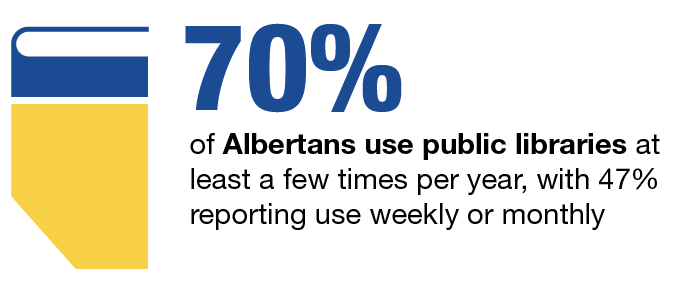
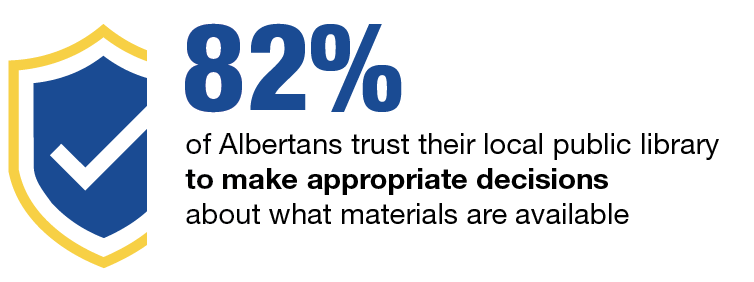
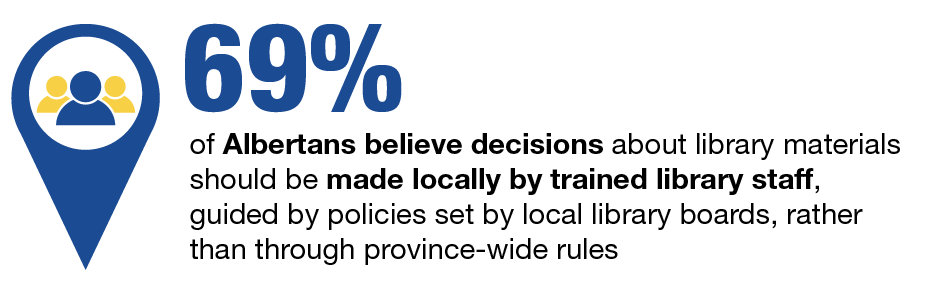
In January 2026, the Coalition of Alberta Public Libraries commissioned research by Alberta pollster Janet Brown to better understand public views on library decision-making and the principle of intellectual freedom.
This research, opens a new window confirms that public libraries are among Alberta’s most trusted and widely used public institutions. Key findings include:
-
WBRL respects every individual’s right to decide what content they engage with through our library – whether borrowing materials, accessing library services, or participating in programs or events. In the case of a child, these decisions rest with the parent or guardian.
Library materials are selected, catalogued, labelled, and shelved according to their intended audience; children’s, teen, and adult collections are clearly separated. Libraries do not direct what individual children read. Instead, we provide access to a wide range of materials and trust parents and guardians to guide their own children’s choices. Each family can decide what is appropriate for them, while respecting the rights of others to do the same.
-
We encourage you to take a moment to familiarize yourself with the Wood Buffalo Regional Library Board Collection Management Policy.
Library patrons who have an issue or concern with a specific title in our collection can submit a Request for Reconsideration of Library Materials form after reading the source material in full, if they feel that the content of the collection item is not consistent with the criteria outlined in our Board Policies.
Every request is carefully reviewed, formally recorded, and responded to in a timely manner.
-
The Canadian Library Challenges Database, opens a new window provides access to challenges libraries have faced to items in their collection, and to displays, programs, room usage, and computer access.
The Freedom to Read, opens a new window website has a number of resources to help you learn more about titles that have been challenged or banned in Canada or internationally:
-
Official Freedom to Read website: freedomtoread.ca, opens a new window
- Read the Book and Periodical Council's Position Statement on Freedom of Expression and Freedom to Read, opens a new window
Centre for Free Expression: cfe.torontomu.ca, opens a new window
A platform dedicated to Freedom of Expression and the Public's Right to Know.
Genuine democracy, advancement of knowledge, individual self-development, and social justice depend on a society in which freedom of expression and the right to know are a reality for everyone. The Centre for Free Expression works to advance these rights though public education, advocacy, law reform, research, advisory services, policy analysis, assistance to courts, and organizational collaborations.
Canadian Federation of Library Associations website: cfla-fcab.ca, opens a new window
- Read the Canadian Federation of Library Associations' Statement on Intellectual Freedom and Libraries, opens a new window
International Federation of Library Associations and Institutions website: ifla.org, opens a new window
- Read the International Federation of Library Associations and Institutions' Statement on Libraries and Intellectual Freedom